
Record it. Understand it. Automate it.
Know what every decision was based on.
Decisions get made in meetings, notebooks and chat threads. A month later, nobody can say why.
Decision ledger and proof graph
Answer “why did we ship this?” in seconds, with the evidence.
Every claim tied to the runs, data and model versions behind it, from question to decision.
Automatic capture
Your record fills itself. Nobody has to remember to log anything.
Your runs, notebooks and coding agents, recorded as they happen. Or use our SDK.
Find the signals that answer your questions.
Metrics say a model is good. They don’t say why, where it will break, or whether it’s safe to rely on.
Investigations
From “it broke” to “here’s why, and the fix.”
Bring a question about your model. tessel designs and runs the experiments on your model and data, and returns the signals that answer it.
Interpretability
Catch the shortcuts that won’t survive new data.
Feature visualization and sparse features show what the model relies on.
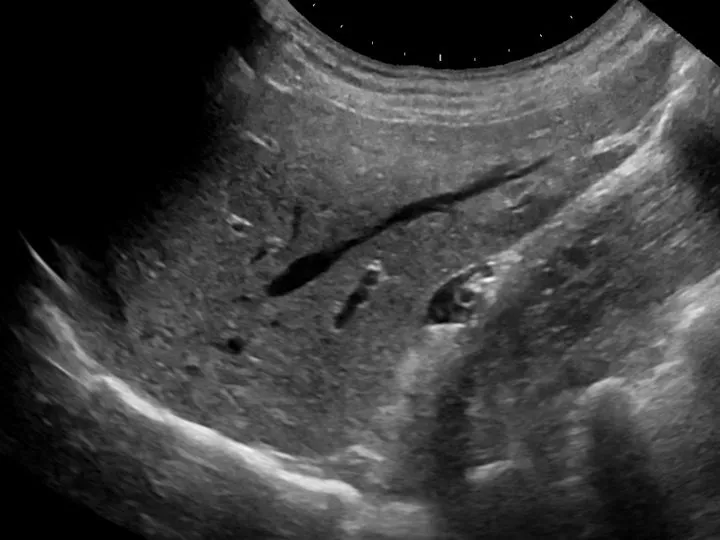
 feature 7 · liver vessels
Simulation
Spend your time on the questions that could change the decision.
Before anything runs, simulate how far each answer could shift the decision.
Autonomy you can justify.
The same decisions come up every week. Before a system makes them on its own, you need to know how far to trust it, and the moment that changes.
Decision benchmark
Know how far you can trust a system to make the call.
Models, processes and agents are scored against your own past decisions before they get any autonomy.
| Past decision | System’s call | Your team’s call |
|---|---|---|
| Ship v2.3 to the new site | yes | yes |
| Retrain on the winter data | yes | no |
| Switch to a larger backbone | no | no |
| Agrees with your team on 22 of 24 past decisions | ||
Continuous monitoring
Know the moment new data stops looking like what you decided on.
New data and outcomes are checked against what each decision assumed. Discrepancies are flagged automatically, and a person steps in.
Learning from outcomes
Every decision makes the next one better.
What happened is compared with what was expected. The gap updates which signals matter, for your team and for automated decisions.
| Decision | Expected | Turned out |
|---|---|---|
| Open the held-out set | 0.88–0.92 | 0.90 |
| Ship v2.3 to the new site | holds | drifted at week 6 |
| The gap becomes a new signal: site drift is now checked first. | ||
How it works
Start from the decision, not the metric.
Most evals and benchmarks are built before anyone knows the decision they’ll inform.
18 questions on the table: what if, what about, we want this.
Where teams start.
“Is it ready?”
tessel tests each claim the decision rests on, with the held-out set untouched until the end.
A decision brief, every claim tied to its evidence, ready for whoever signs off.
“Why did it fail?”
tessel finds where it breaks, shows what the model relies on, and tests the causes one by one.
The mechanism of failure, and the fix: data to add, a threshold to move, a simpler model.
“What should we try next?”
tessel simulates how each answer could shift the decision, and runs only the few that could change it.
A ranked plan you approve, and results as they land: experiments in hours, not days.
“Can this run without us?”
Your past decisions become a benchmark. Routine decisions run on their own; drift goes to a person.
Time back, consistent decisions, and an early warning when new data stops matching.
Questions about tessel.
How is this different from evals or monitoring?
Evals and monitoring produce numbers: often answers to questions you didn’t need to ask, or partial answers to the ones you did. tessel flips that. It starts from the decision, works out which questions could change it, and answers each one properly, running your evals where they help and building the ones that are missing. Doing that for every call takes infrastructure, and that’s what tessel is: a record of every decision, what it rested on and what happened next.
How do I get started?
Book a call and bring one decision you need to make. We connect tessel to the model and data behind it and work with whoever knows what the decision depends on. You see every result as it lands, and the decision goes into your record.
Who does the work, your team or ours?
Your team, on tessel. Your engineers keep working the way they do, with every decision recorded and the right signals in front of them. When you need more hands, or evaluations you can’t run in-house, our forward-deployed engineers do the work with you, on the same platform and the same record, and more of it runs on its own as tessel grows. Either way, you make the call.
Is this a certification?
No. tessel gives whoever certifies your model the evidence to do it: every claim tied to the runs, data and model versions behind it, including where the evidence runs out. The whole record is queryable, so a regulatory submission, an audit or a release review starts from evidence, not memory.